Category

Blogger templates

Tuesday, December 29, 2015

What is inside the oak apples?

by Unknown  |  in Science at  7:02 AM
Although an oak apple looks like a fruit, it is actually a deformed leaf hanging by its stem or petiole on the underside of oak leaves. Gall wasps from oak apples. In summer, the female wasp injects its eggs into the leaves of oak trees. The larvae that hatch inside the leaf are small and round. As they grow, they cause a chemical reaction that forms a gall around the larvae. These larvae eat and grow within the gall before emerging as adult wasps.

Monday, December 28, 2015

Why do stars seems to wander across the night sky?

by Unknown  |  in Science at  7:00 AM
The stars do not ‘wander’. The apparent change in their position in the night sky is due to the fact that the Earth, and we along with it, are in a constant state of rotation. As such, our rotational movement happens below that of the stars. If one looks at the night sky in the northern hemisphere, only one star does not appear to move. Therefore it is also known as fixed star. Incidentally, it is positioned exactly above the North Pole and hence is also called the ‘pole star’. It is a good aid in determining directions in the dark, being forever present in the north. Earlier, it helped sailors to find their way in the seas.

What is symbiosis?

by Unknown  |  in Science at  5:00 AM


Symbiosis is a phenomenon in which two living organisms live together in such a way that they are mutually beneficial to each other. For example, the colorful clownfish live in a symbiotic relationship with the sea anemones. The clownfish enjoy the protection of the poisonous nettle fibers of the sea anemone and the sea anemone survives on the left – over food of the fish. The lichens that live in association with a fungus and an algae are also good examples of symbiotic relationships. Through the close interaction between its symbiotic partners, the lichens are able to grow in places, where they could never have existed alone.

Why is there an interval between lightning and thunder?

by Unknown  |  in Science at  4:42 AM
The reason for this is that light travels faster than sound. The speed of light is 300,000 km per second. On the contrary, sound is slow and covers only about 330m in one second, i.e. one kilometer in 3 seconds. If we count the seconds till we hear the thunder after seeing the flash of lightening in the sky and divide this value by three, we will know how many kilometers the storm is away from us.

Sunday, December 27, 2015

What do the antelopes living in the desert drink?

by Unknown  |  in Science at  10:30 PM
Many antelopes, such as the White Oryx found in the Arabian Peninsula, have adapted themselves to a life in the desert. They do not drink water, but eat when it is cooler and when the plants are wet with dewdrops. They pass very little moisture out of their bodies because their bodies have a system of cooling the blood before it reaches the brain. Their fur is generally paler on their underside to reflect ground heat away from the stomach. Even humans such as the San people living in the Kalahari in South Africa have adapted themselves to the desert life. They are experts at finding juicy melons and water storing roots. They also bury sealed ostrich eggs filled with water for use during dry seasons.

Why do birds migrate to the south in autumn?

by Unknown  |  in Science at  2:30 PM
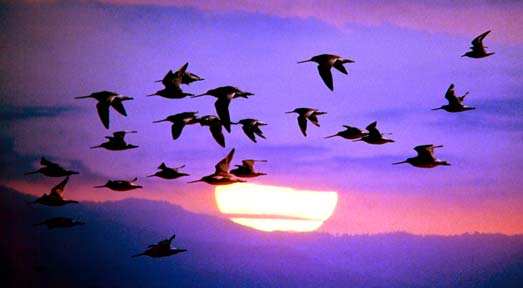
Many birds such as starlings, cranes and swallows migrate to the south in autumn because they do not find enough food in winter. It is not good to feed the birds because it may disturb their regular habits of finding food for themselves. Their destination and the migratory path is the same every year. For years, scientists puzzled over the birds’ ability to take exactly the same path every year but now it is assumed that birds possess a ‘magnetic sense of direction’ and orient themselves to the magnetic field of the Earth, using the position of the sun during the day, and the stars at night.

What is the job of a monarch?

by Unknown  |  in Science at  11:00 AM
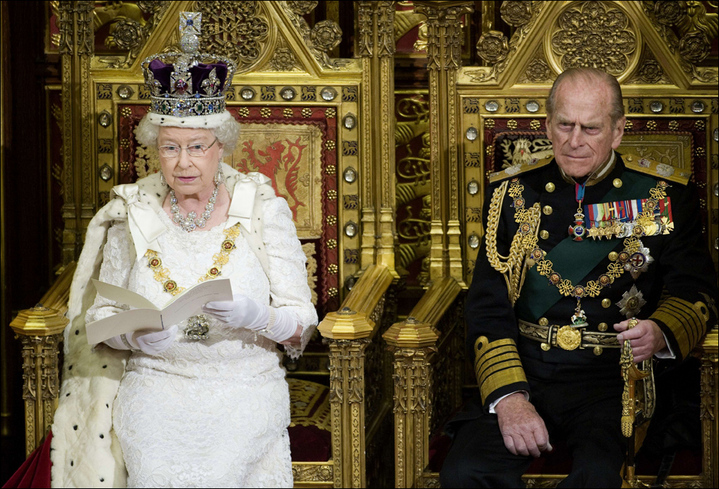
Earlier, the monarchs were the undisputed rulers of a country, but today their role is mostly that of cultural representatives. They represent the country on state visits and are an image of national unity, pride and identity. They also sign the laws passed by the parliament. Often the monarchs work for a good cause or request donations for a certain charity. Usually, they have no power to influence political decision making. Only in a few countries like Saudi Arabia, Kingdom of Swaziland, and Jordan does the king have full executive powers.

Proudly Powered by Blogger.